 0
0
 0
0
AI agent deployments often begin with runtime gateways as the primary safeguard, yet this approach frequently leaves critical gaps in identity and attribution. The pattern arises because gateways rely on context that many organizations have not yet established. In practice, teams discover that authentication alone cannot prevent agents from drifting beyond intended tasks or exposing sensitive data through memory issues.
The core issue stems from brownfield environments where existing identity systems predate agent adoption. Without first mapping which agents exist, who owns them, and what tasks they perform, any downstream enforcement operates on incomplete information. A gateway may validate a token, but it cannot determine whether an action aligns with the original delegation scope.
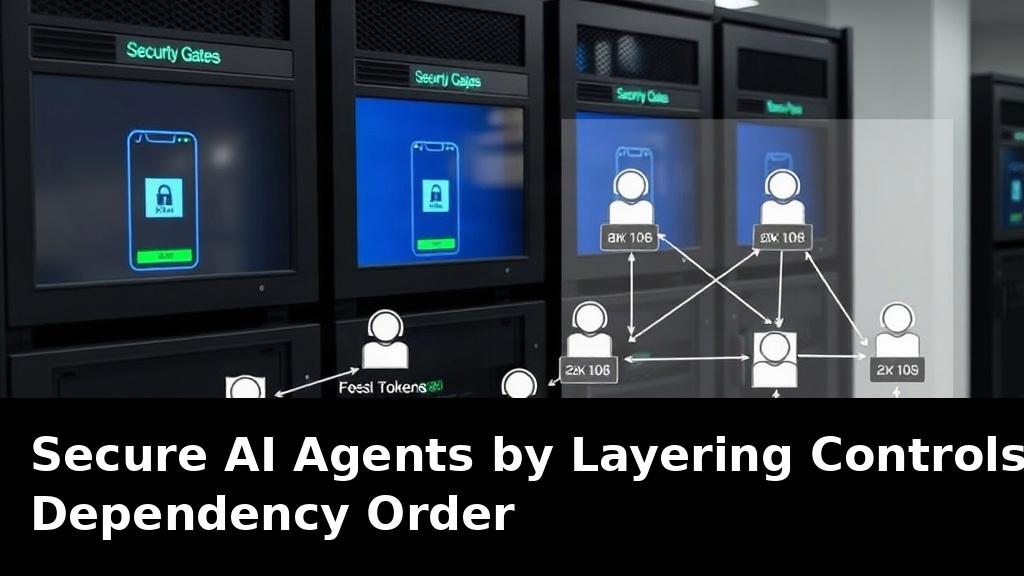
To address this, security leaders advocate starting with an agent inventory. Every production agent must carry a named owner, documented purpose, approved tools, and defined lifecycle state. This registry becomes the foundation for all subsequent controls and prevents the first hour of incident response from being spent simply identifying assets.
Next comes distinct agent identity paired with delegation context. Agents should not inherit developer tokens or shared service accounts. Instead, systems must record the principal who initiated the work, the specific task assigned, and the resources required. This separation ensures logs attribute actions correctly rather than lumping them under a human user who never started the process.
Task-scoped, short-lived credentials follow. By limiting access to the exact duration and tools needed for one job, organizations reduce the blast radius if an agent is compromised. Workload identity features already present in many IAM platforms can implement this without requiring new infrastructure.
Attributable telemetry forms the fourth gate. Audit systems must capture not only the resource accessed but also the agent identity, parent task, and outcome. In regulated environments this chain of custody becomes essential for demonstrating oversight.
Only after these layers exist does runtime enforcement at the gateway deliver full value. Policy decisions can then incorporate agent, principal, task, and action context together. Irreversible operations such as payments or production changes receive the strictest checks.
Behavioral baselines and cross-system kill paths come last. Detectable patterns require prior attribution data; otherwise anomaly detection lacks a reliable reference. A complete kill path must disable identities, invalidate credentials, block tools, terminate tasks, and isolate workloads.
One key consideration in this sequence is its compatibility with legacy IAM deployments common in large enterprises. Extending existing workload identities rather than replacing them lowers friction and preserves audit continuity. Another important factor is how this ordering supports complex multi-agent workflows where one agent may invoke others. Proper upstream context prevents cascading privilege escalation across chained actions.
Teams beginning implementation should select ten production agents and document ownership details first. They can then test whether current logging distinguishes agent activity from human sessions. Reconstructing a full task chain from initiation to downstream effect quickly reveals where attribution breaks. Following this dependency order ensures each control builds on verified context rather than assumptions.